There are stories, characters, music and cultural phenomena that long outlive the era in which they were born. Why It Lasts looks at what happens to them afterwards: how they are changed by time, audiences, nostalgia, new adaptations, or the industries that keep returning to them. Through films, television, books, music and the communities that grow around them, I want to understand what keeps something culturally present even when the world around it has become very different from the one in which it began.
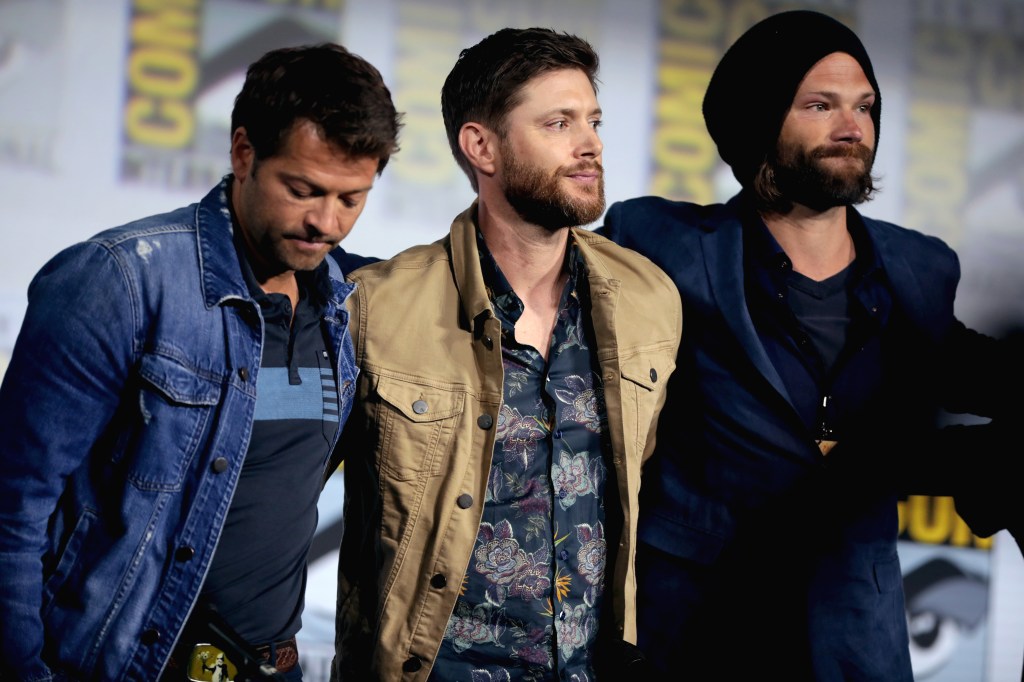
Jensen Ackles, Jared Padalecki and Misha Collins are still regular guests at Supernatural-related events in 2026, while Creation Entertainment has already announced several US dates for 2027, including Salt Lake City, the Washington area and Kansas City. In Düsseldorf, Purgatory 10 took place in May this year, Halloween Edition 3 follows at the end of October, and Purgatory 11 is already being organised for next May. All of this is happening nearly six years after Supernatural ended on 19 November 2020, after fifteen seasons and 327 episodes. So what, exactly, ended that night?
When There Was Still a Next Episode
As a long-time Supernatural fan, I know part of the life around the series from the inside. I wrote fan fiction, took part in online role-playing games and spent time in fan communities while Sam, Dean and everyone around them were still changing from one week to the next on television. The stories we built around those characters did not, of course, have to remain faithful to the series. A new detail could be incorporated, another ignored, a decision argued over for days, or a few minutes on screen turned into the starting point for an entirely different story.
Fan fiction, and role-playing in particular, existed in a very particular conversation with whatever was happening in the series. If you write the same character for months or even years, you inevitably develop an internal sense of them: how they speak, what they would keep to themselves, what frightens them, how they might react in a particular situation. Meanwhile, the writers of the original story keep moving that same character forward, occasionally coming up with something that fits beautifully with everything you already thought about them — and sometimes with something you would much rather pretend never happened. Your own version does not suddenly cease to exist; you simply reach another point where you have to decide what to do with whatever the series has added.
Rebecca Williams uses the term post-object fandom for the state in which the original work is no longer expanding, while the fan culture around it continues to do so. After 2020, Supernatural lost the steady external source of new material that had kept feeding those conversations. You can still rewatch an episode, write another story or return to an old character, but you now know that another episode is not going to arrive and unexpectedly interfere with everything. Williams’s research looks precisely at how fan identity and community practices can continue once the series itself has ended.
And, of course, not everyone stayed. Drawing partly on her own experience with Supernatural, Bridget Kies writes about what it means to become an ex-fan and to make sense of a story and a community that once occupied an important part of your life. That does not necessarily require a dramatic break or a turn towards outright dislike. Sometimes other things simply become more important: different people, different series, a different period of your life. When we see full rooms, newly announced events and active online communities today, it is easy to feel as though that whole world somehow remained intact. But the people most visible are the ones who stayed — or arrived later — rather than those who simply moved on.
The franchise also tried to continue through a new story of its own. Launched in 2022, The Winchesters arrived as a prequel about the younger John and Mary Winchester, with Jensen Ackles serving as an executive producer and Dean providing the narration. The CW cancelled it after one season, and Warner Bros. subsequently tried, unsuccessfully, to find it another home. The network was going through major business changes at the time, so the cancellation alone says very little about either the quality of the series or the wider level of interest in Supernatural. This particular attempt to extend the official television story was, in any case, short-lived.
A Song Finds an Audience
Richard Williams, Kansas’s founding guitarist, noticed a much more tangible change in his own audience. In a 2023 interview with ABC Audio, he remembered suddenly seeing remarkably young faces in the front rows at Kansas shows: thirteen-, fourteen- and fifteen-year-olds who were hardly likely to have grown up with the band’s records from the 1970s. Eventually, the band asked what had brought them there. The answer was simply: “Supernatural.”
“That television show brought probably the biggest thing that’s happened to our career in the last quarter century,” Williams said, adding that some of those once-young listeners now come back with their own children.
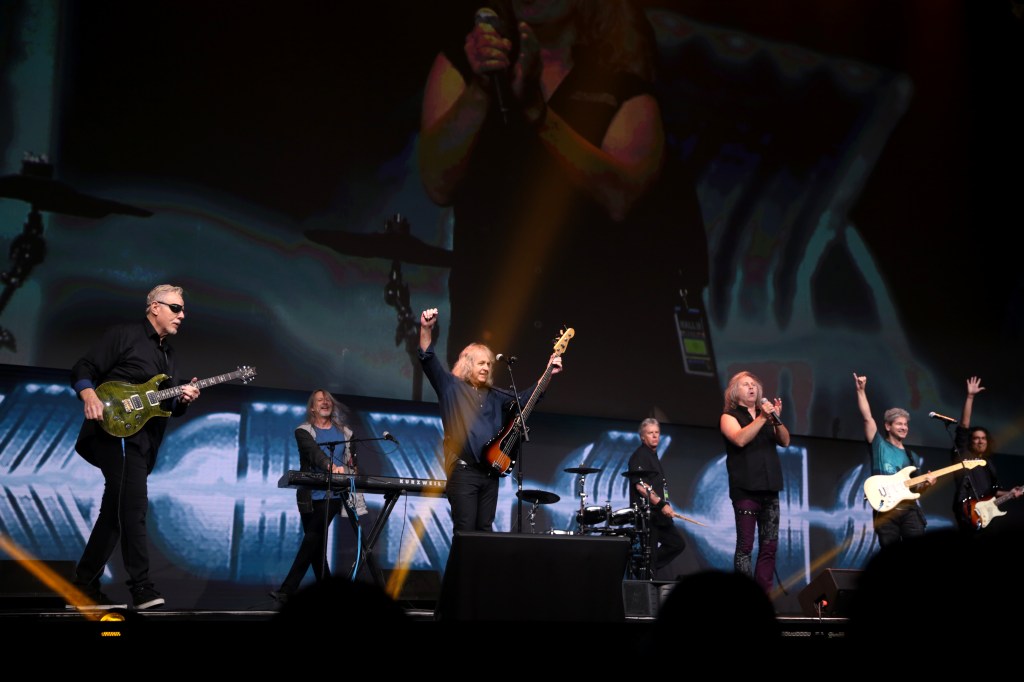
Carry On Wayward Son was released in 1976, almost thirty years before Supernatural began. The series repeatedly used it in its “The Road So Far” recaps, particularly around season finales, until those opening notes developed an unmistakable Supernatural association of their own. Viewers already knew the kind of sequence that was coming: the decisions, losses and confrontations of the preceding episodes, just before the final chapter of that season began.
In 2017, the connection moved in the other direction when Kansas performed the song live during the Supernatural panel at San Diego Comic-Con. Viewers who had spent years hearing it over montages of the Winchester brothers’ story now heard Kansas perform it in front of them. And judging by Williams’s later account, plenty of them did not stop at that one song: they went to Kansas concerts and found an entire catalogue waiting there.
Survivor’s Eye of the Tiger became connected to the series in an entirely different way. During one take while filming Yellow Fever, Jared Padalecki failed to give Jensen Ackles his usual cue, the camera kept rolling, and Ackles carried on lip-syncing and playing air guitar. The improvised sequence was eventually shown after the episode, and the series itself later referred back to it. It became familiar enough among viewers that the song also found its way into karaoke events at Supernatural conventions.
Asia’s Heat of the Moment has been tied to Sam’s endlessly repeating Tuesday morning ever since Mystery Spot: each new loop begins with him waking up to the song. O Death entered the series’ musical memory in a different way. The CW commissioned Jen Titus’s version of the traditional Appalachian song specifically for Supernatural, and it accompanied Death’s entrance in Two Minutes to Midnight.
In the Same Room
In a 2025 anniversary interview with TV Insider, Jensen Ackles began with the relationship the cast themselves had built over twenty years when he compared the convention circuit to a band on tour. After two decades of working together and knowing one another, they keep meeting again in different cities, sharing a stage and then returning to their own work until the next date.
“It really is like a band going on tour,” Ackles said. Every few weeks they come together again to put on a show for people brought there by a shared love of Supernatural.
The comparison becomes particularly interesting after the Kansas story. People do not necessarily buy a concert ticket because they need to find out how a song they already know is going to end. Often they want to hear it precisely because they know it so well. Supernatural’s actors can similarly return to stories from the set that some of the audience may have heard before, except that someone different may be sitting beside them this time, remembering it differently, interrupting or adding another detail. After twenty years, the passage of time itself also becomes part of how they talk about the same work.
Misha Collins remembered his first Creation convention very differently in the same interview. He was surprised that there were fans at all. On set, he explained, the same crew watches them work day after day, while the audience who will eventually see the finished scene is nowhere in the room.
“We’re really only getting the response of the glass on the camera,” he said, contrasting that with the immediate reaction they receive at live events.
The making and the reception of television happen in different places and at different times. For an actor, a particular scene might have been the seventeenth setup of an exhausting filming day before everyone immediately moved on to the next one. Someone sitting in the audience may still want to talk about those exact few minutes years later. On one side it is a memory of work; on the other, it may belong to an entire period of someone’s life.
Creation Entertainment co-founder Adam Malin put it in far more business-minded terms in another 2025 TV Insider piece: “This is a show that was built for cons.” Coming from a convention organiser, that is both a judgement and the product of commercial experience rather than a fact about the series’ original conception. Creation itself says it has produced more than two hundred Supernatural events; the convention circuit developed while the series was still on air and was already well established by the time of the finale.
Still, Malin’s description is worth taking seriously enough to ask what he might have seen in the series as an organiser. Fifteen seasons produced an enormous shared history and a large cast of characters; alongside the humour, the actors’ long-standing familiarity with one another also works particularly well in a live setting. Sam and Dean’s relationship, the characters who kept appearing around them, and the conflicts viewers followed for years provide more than enough material for a stage conversation without anyone needing to announce another season.
By now, those rooms can also include people who never watched a single Supernatural episode when it was originally broadcast. For someone discovering the show through streaming in 2026, all 327 episodes already exist: if they want to know what happens after a cliffhanger, they can simply press play again. They can be sitting in the same room as someone who started watching in 2005 and once waited weeks or months for the same answer. The scenes are identical. The route to them is anything but.
Stephanie Gentry’s story offers another route altogether. Supernatural was her father’s favourite show, and when he was diagnosed with terminal cancer, they bought him passes to a convention. He died three weeks before the event. At her mother’s urging, Gentry went anyway, and later returned again and again. “I feel like my dad led me to having all these new friends,” she told TV Insider in 2025. By then she had attended fourteen conventions, and in explaining why she kept going, she spoke about the show, the cast and the friends she had made there.
The original reason for that first trip did not disappear, but something was added to it that had not existed when the tickets were bought. Paul Booth’s Supernatural Fandom: The Fandom Business examines, in part, precisely this tension: the framework of a commercial convention is set by its organisers, but that does not determine what happens between the people who attend it. The guest list, starting times and ticket prices can all be published on a website. The relationships formed there are much harder to programme.
The Cost of Proximity
Those encounters also come with a very literal price. Admission is only one of the costs at Purgatory and Creation events: photo ops, autographs and meet & greets are sold separately, while travel and accommodation add further expense. The current ticket page for Purgatory Halloween Edition 3 likewise lists admission, photo ops, autographs and meet & greets as distinct categories.
This is hardly unique to Supernatural. The concert industry has long offered VIP packages built around meet & greets, photographs, soundchecks, Q&As, early entry or exclusive merchandise, while major pop-culture conventions likewise sell photographs and autographs separately. “VIP” does not necessarily mean meeting the artist at all: some packages charge a premium for a separate reception, hospitality or exclusive merchandise without the performer taking part.
Ronan Harris, frontman of VNV Nation, draws the line somewhere very different. In a 2025 interview with Monkeypress, he said he did not want to charge people simply to meet him and described paid meet & greets in stark terms: “I think it’s exploitation and I think it’s disgusting.” He immediately acknowledged, however, that other artists can make their own choices, and audiences can choose to pay if they want to. Harris said he prefers occasionally going out to speak to people spontaneously when circumstances allow.
That does not mean a paid encounter can be reduced to someone handing over money for a few seconds. Which is precisely why it is worth looking at what remains after those few seconds are over.
What Does the Photograph Capture?
At the end of a photo op, there is a photograph. It shows a recognisable person and someone who paid to stand beside them for a short time. That makes it fundamentally different from simply buying a portrait of the same actor, because the person making the purchase is in the image too. It does not merely document what Misha Collins or Jensen Ackles looked like in a particular year; it also records that this person stood in the same space with them on a particular day.
If the entire price of the service is divided only by the number of seconds spent together, it is easy to arrive at a fairly absurd per-minute figure. But that calculation leaves out the photograph itself: something that can be taken home, shown to other people and looked at again years later. None of that automatically makes every photo op good value or a profound experience for everyone who buys one. It simply means that duration alone is not a particularly useful way of describing what the encounter is worth to the person who chose it.
Jackie Raphael and Celia Lam use the term pre-staged encounters to draw attention to the organised nature of these situations. In their study of convention panels, they examine the ways a moderator, limited time, clearly assigned roles and the structure of the event itself shape the interaction. Personal reactions therefore take place not in an unstructured spontaneous encounter, but within a situation deliberately created for them.
In Fans Meet Celebrities: Cameo and Conventions, Gayle S. Stever looks at what happens when someone previously known primarily through media becomes the subject of an actual face-to-face interaction. The history on each side is obviously unequal: a fan may have followed an actor’s work for ten years, while the actor has known that particular fan exists for ten seconds. That does not make a kind response insincere, nor does the moment automatically become insignificant because someone else is standing in front of the actor a few minutes later.
A personal encounter does not retroactively make everything a viewer has felt towards a character or actor mutual, and it does not promise any relationship afterwards. Nor does its significance need to carry exactly the same weight on both sides.
Emotional meaning does not erase the transaction, just as the existence of a transaction does not invalidate the emotional meaning.
The finished photograph, or the story of the encounter, can then travel very easily online. A comment made on stage becomes a video, a reaction becomes a GIF, a short anecdote becomes an inside joke recognised years later by people who were never there. Over twenty years, Supernatural has accumulated an enormous and fairly unruly second layer of material around its 327 episodes.
Jessica Hautsch’s research into Tumblr, for example, shows how a gesture cut from a television episode can move into an entirely different conversation. A GIF is no longer merely a shortened copy of the original scene: it can become an emotional reaction, a joke, an argument or a reference whose meaning depends sometimes on knowing the original episode and sometimes on knowing the history of how fans have used it.
Someone finding Supernatural today therefore does not encounter it in an empty space. Alongside the 327 episodes are old fan fiction, interviews, GIFs, memes, convention footage and jokes that sometimes already have lives of their own. A viewer may meet one of them before ever seeing the scene it came from, or read an interpretation of a character that carries traces of more than a decade of earlier arguments.
When I was writing fan fiction and taking part in role-playing games, the series was still very much on air, so the way we saw individual characters kept shifting with it. Something that happened in a new episode could directly change the way we went on writing them.
Sam and Dean’s hunts on television came to a close in 2020. The same 327 episodes are available to everyone: someone who joined at the very beginning in 2005 and someone who clicked on the series for the first time on a streaming platform last night.
New Supernatural stories, however, are still being made. A whole series of officially licensed novels appeared while the show was running, and in 2026 its comic-book world gained fresh momentum as well. Dynamite released Supernatural: Wayward Special #1 in September, setting up a separation between Sam and Dean; on 21 October, Dean Winchester #1 and Sam Winchester #1 will arrive simultaneously, giving each brother his own series for the first time. Dean heads to New Orleans to pick up a case John left unfinished, while Sam finds himself on a mysterious farm after doing something to his brother that he cannot take back.
The 2020 finale therefore closed something very specific: Supernatural as a television series that had run for fifteen seasons. The world built around it has not stood still since. Other writers continue it, the actors revisit it on stage, former viewers return to it, while others are only encountering it now.
Perhaps this is where it becomes genuinely interesting to ask what remains of a work once it slips free of the period in which it was created. In a different time, in a different context and with different audiences, it can come to mean something else while still remaining recognisably connected to where it began.
And Supernatural is hardly unique in that respect. The same process can take countless forms, depending on whether a work is carried forward by its audience, a new adaptation, another generation, or the industry itself.
Sources & Further Reading
- Rebecca Williams: “This Is the Night TV Died”: Television Post-Object Fandom and the Demise of The West Wing, Popular Communication, 2011.
- Bridget Kies: The Ex-Fan’s Place in Fan Studies, Transformative Works and Cultures, 2018.
- Paul Booth: Supernatural Fandom: The Fandom Business, in Crossing Fandoms, 2016.
- Jackie Raphael & Celia Lam: The Function of Hosts: Enabling Fan–Celebrity Interactions at Pop Culture Conventions, Continuum: Journal of Media & Cultural Studies, 2018.
- Gayle S. Stever: Fans Meet Celebrities: Cameo and Conventions, in Parasocial Experiences: Psychological Theory and Application, Oxford University Press, 2024.
- Jessica Hautsch: Tumblr’s Supernatural Fandom and the Rhetorical Affordance of GIFs, Transformative Works and Cultures, 2018.
- Damian Holbrook / TV Insider: ‘Supernatural’ Trio Reunites to Celebrate 20 Years, 2025.
- Ileane Rudolph / TV Insider: How ‘Supernatural’ Carries on Through Its Massive, Dedicated Fanbase, 2025.
- TV Insider: Supernatural Con “The Road So Far…The Road Ahead”: Inside the Tour for Fans, 2025.
- Jill Lances / ABC Audio: Kansas’ Richard Williams on the Band’s ‘Supernatural’ Resurgence, 2023.
- Kansas: Classic Rock Legends KANSAS Make a Surprise Appearance at Comic-Con, 2017.
- TVLine: coverage of The Winchesters cancellation and the unsuccessful search for a new home, 2023.
- Monkeypress: VNV Nation – Ronan Harris im Interview – Teil 2: “Ich bin kein Rockstar – ich bin Ronan!”, 2025.
- Super-wiki: Eye of the Tiger, Mystery Spot, O Death and Jen Titus background material.
- Titan Books: Supernatural fiction catalogue.
- Dynamite Entertainment: Supernatural: Wayward Special #1, Supernatural: Dean Winchester #1 and Supernatural: Sam Winchester #1, 2026.
- Creation Entertainment: current Supernatural – The Road So Far… The Road Ahead convention information.
- Entertainment Events / Purgatory Convention: official Purgatory event, ticket and programme information.


Leave a Reply