
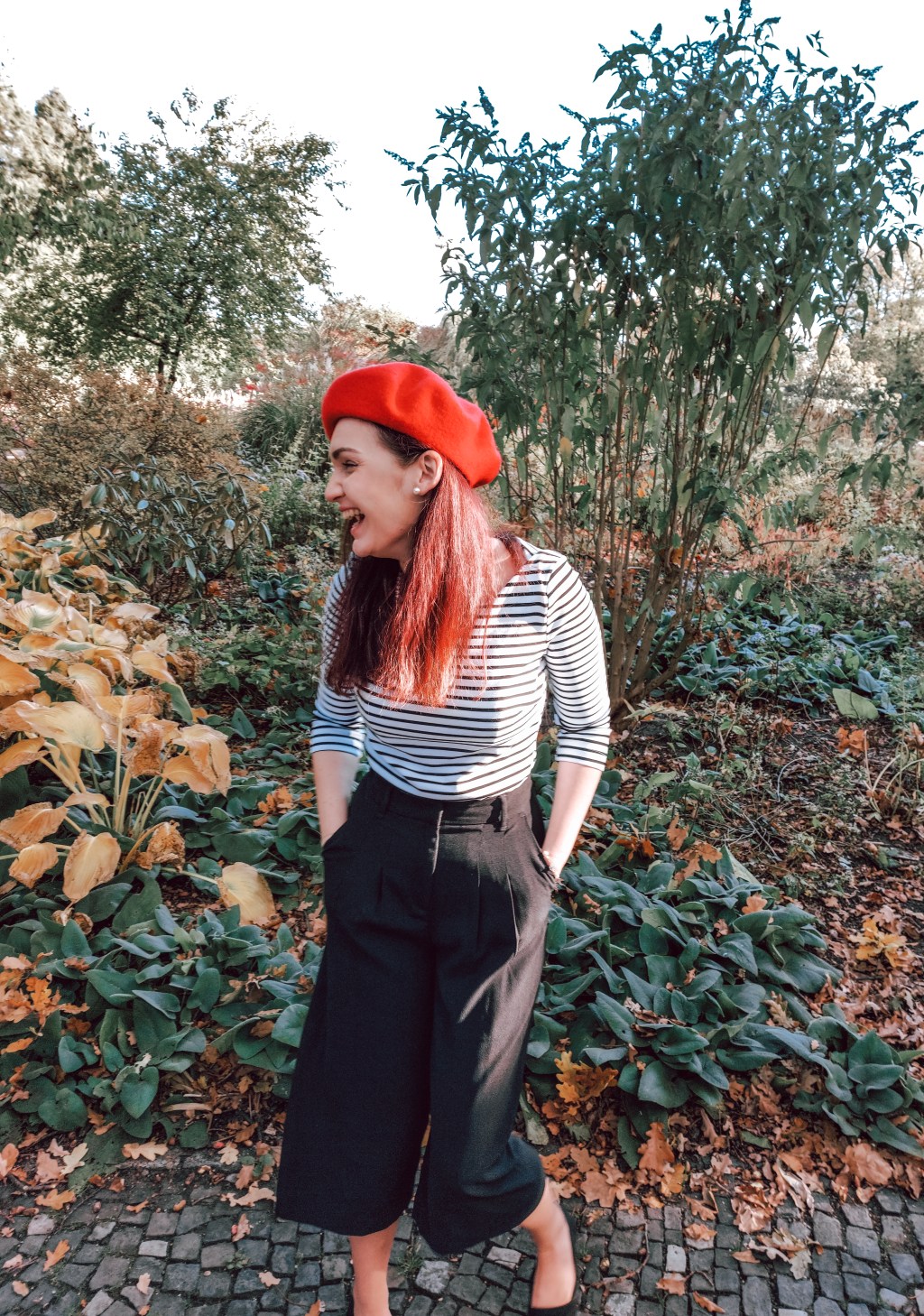
I have always been slightly puzzled by the idea that January is supposed to be the month of new beginnings. The first weeks of the year are dark and cold, and after Christmas most people are left with neither much money nor an impressive amount of motivation. What we do get is an endless parade of resolutions, many of which have quietly turned into administrative clutter by February.
For me, September has always made far more sense as a time to start again.
Some of that is probably left over from school, but I have always liked this strange period between seasons. Summer has not quite left yet, although the change is already obvious. Mornings are cooler, darkness arrives earlier, jackets slowly return to everyday life, and yet the terraces still fill up the moment the sun comes out. For a few hours, you can almost convince yourself that winter might simply give Hamburg a miss this year.
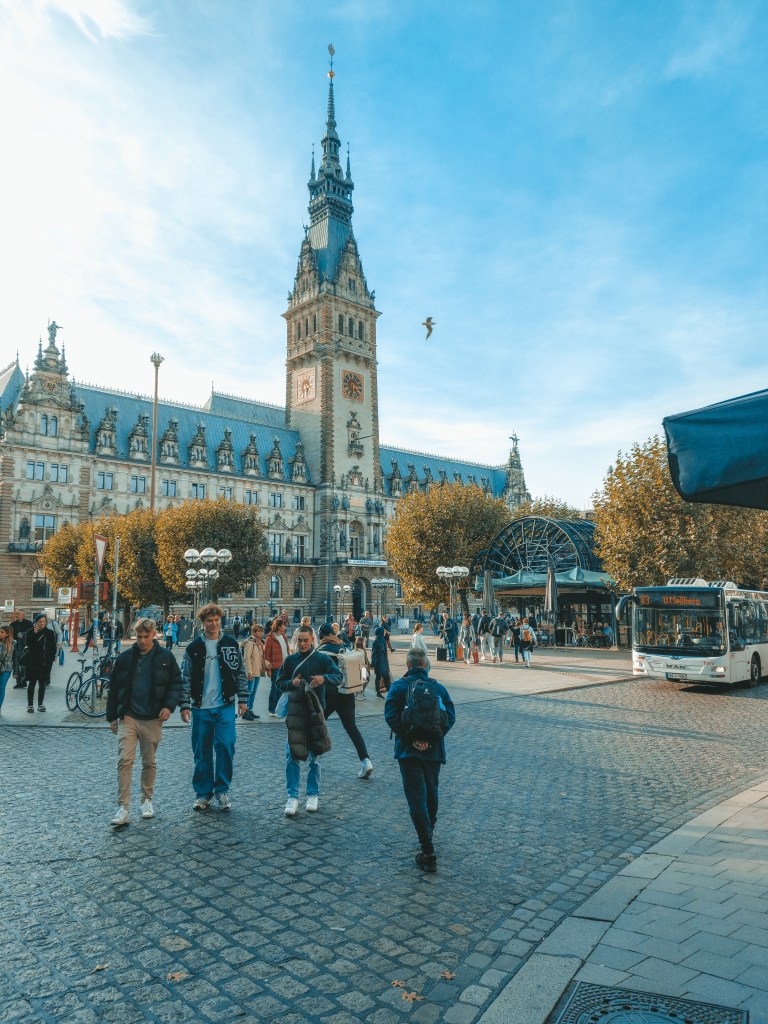
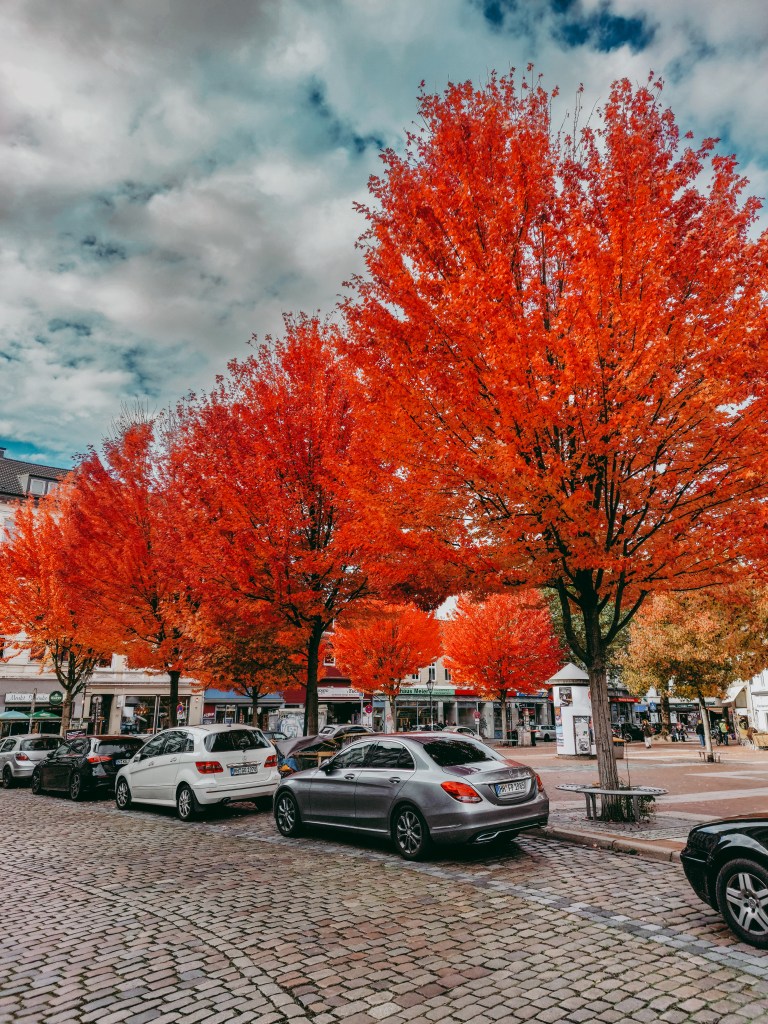
I have been living here for four years now, which puts me in that peculiar middle ground where a city is no longer new but has not become entirely predictable either. I no longer look up at the Rathaus tower as a visitor, and crossing the Elbe is hardly an event in itself, but one wrong turn or an afternoon with nowhere particularly urgent to be is often enough for Hamburg to produce something I have somehow missed until now: an interesting façade, a tiny restaurant, a concert poster, or an entire street I must have passed half a dozen times without properly seeing it.
I have memories attached to the city now, places I return to, people I know and opinions I have formed, but it still manages to surprise me often enough.
The blog, meanwhile, has been quiet for rather longer than I originally intended. Other things took over for a while, and writing kept getting pushed further down the list. Over the past few weeks, though, I have repeatedly caught myself doing what I used to do: spotting a programme, finding a new place or witnessing some small scene around the city, and immediately beginning to edit the story in my head — which suggests the habit survived the break rather better than I expected.
Conveniently, the second half of September has given me more than enough to come back to.
Reeperbahn Festival 2026 – important, even if we have never quite become friends
I should probably begin with the event that, after years in music journalism, I ought to love without reservation.
The Reeperbahn Festival and I, however, have never developed a particularly close relationship.
On paper, it is almost suspiciously well suited to me: four days of music, hundreds of artists, dozens of venues, new acts, showcases, conferences and industry events, while large parts of St. Pauli effectively turn into one enormous music venue. This year around 425 acts from more than 40 countries are performing across over 70 venues, so its importance to Hamburg and to the European music industry is difficult to argue with.
In practice, I sometimes find the festival a little too carefully curated, a little too trend-conscious and, every now and then, a bit too keen to position itself correctly on whatever cultural debate happens to be current. It probably does not help that a fair amount of electronic music makes me look for the nearest exit with roughly the same urgency as a fire drill.
Fortunately, the Reeperbahn Festival is large and varied enough that nobody is actually required to spend the night nodding along to techno in a dark basement. I would probably start at the more guitar-heavy end of the programme.
Belfast duo Dea Matrona play Knust on 18 September at 8 p.m. Orláith Forsythe and Mollie McGinn began playing modern rock in small Belfast pubs and have since made their way to stages including Glastonbury and Eurosonic, as well as opening for Sting and Bryan Adams. That is much more my territory.
The following evening, the same venue hosts French artist Oria, whose music brings traditional chanson together with a more contemporary singer-songwriter and pop sound. Dalida, Édith Piaf and Jacques Brel appear among her influences; she plays Knust on 19 September at 7.50 p.m.
And then there is someone on the programme whom I happen not to know from a three-line festival biography.
Igor Landy, a Paris-born singer-songwriter based in Hamburg — and a dear friend of mine — plays Alte Liebe with his band on 18 September at 10.30 p.m. His music moves somewhere between pop, rock and soul, and having seen him perform more than once over the years, I can safely say that standing quietly behind a microphone for an hour has never really been his approach to live music.
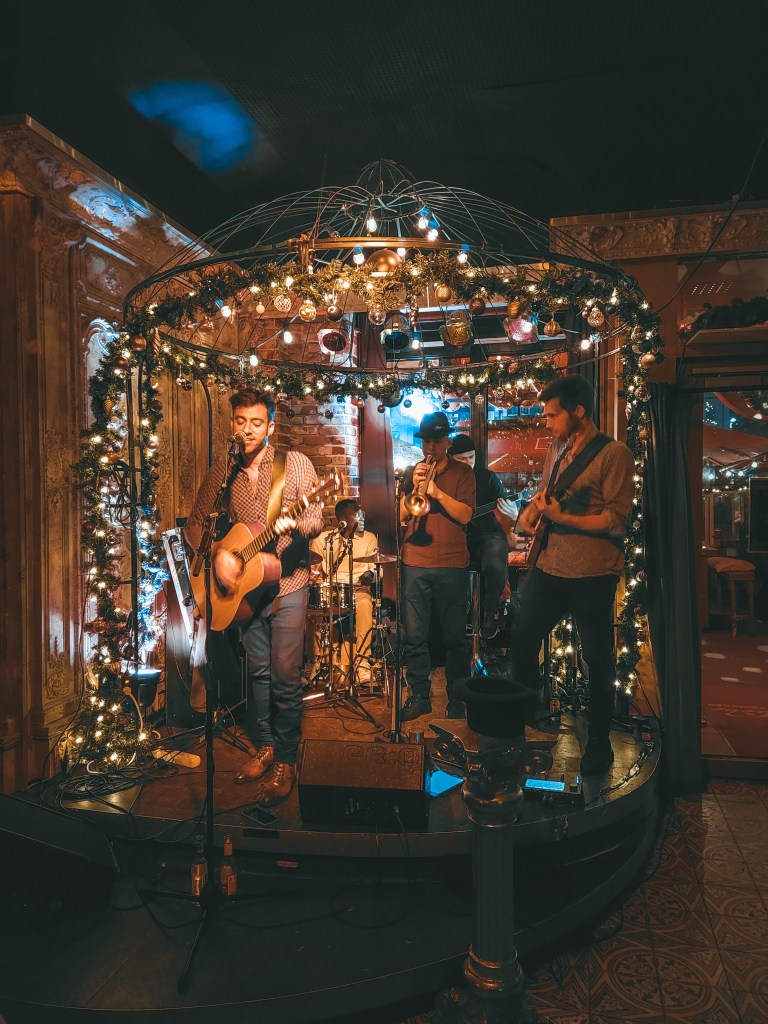
As it happens, I also have a concert photograph of Igor taken at exactly the same venue in November 2022, so that one is definitely coming out of the archive.
Two days later, he will be playing again — only in a very different setting.
Festival Français – a little bit of France in Bahrenfeld
On 20 September, the Festival Français returns for its fourth edition at Küchenfreunde Kraftwerk in Bahrenfeld. It runs from midday until 8.30 p.m., admission costs just two euros, and the programme includes French food, pastries and viennoiseries, crêpes, galettes, cheese, wine, grilled dishes, cocktails and live music.
By the time French pastries, cheese and wine entered the conversation, I no longer needed convincing.
Igor will be performing as a duo between 1 and 3 p.m., so anyone who misses him at the Reeperbahn Festival on Friday can catch him again on Sunday in rather more relaxed surroundings.
I have always considered food part of culture rather than a necessary break between two museum visits. You can learn a surprising amount about a country from what people eat, how much time they are prepared to spend around a table, what they drink with it, how the same dish changes from one region to another, and how easily a meal becomes a social occasion rather than simply a way of getting fed.
The French have spent the past few centuries building a fairly convincing case for themselves in that department.
Harbour Front Literaturfestival – books, conversations and a few familiar names
While the Reeperbahn Festival is winding down, the Harbour Front Literaturfestival begins on 19 September and continues until 11 October, with more than 70 events spread across Hamburg.
I have always preferred this kind of literary festival to the more traditional format where somebody sits behind a table next to a glass of water, reads from a new book for twenty minutes and everybody politely goes home afterwards.
I am at least as interested in how somebody thinks as I am in what they eventually create. Years of interviewing musicians probably have something to do with that. After a while, biographical facts become the least interesting part of an interview. The interesting part usually begins when you find out why somebody made a particular decision, what changed the way they think, how they dealt with failure, or what they do when nobody happens to be applauding.
This year, 26 September immediately stood out to me. Philipp Oehmke will be in conversation with Campino, while Irvine Welsh appears with Thorsten Nagelschmidt on the same evening. Welsh is visiting Hamburg for the first time, and the author whose Trainspotting became an international phenomenon thirty years ago will be speaking at St. Pauli Kirche.
That is also what makes Harbour Front interesting to me: its programme places writers alongside musicians, journalists and artists from very different backgrounds, which gives the conversations room to go well beyond the publication date of somebody’s latest book.
Elbinsel Kunst- und Ateliertage – open studios in Wilhelmsburg
The 14th Elbinsel Kunst- und Ateliertage also takes place on 19 and 20 September in Wilhelmsburg and around the Elbe islands. More than 80 artists and creatives at 16 locations will open studios, workshops, courtyards and gardens to visitors over the weekend.
An open studio has a completely different atmosphere from a conventional exhibition. In a museum, we meet the finished work: properly lit, labelled and placed within a curatorial concept. In a studio, there are unfinished pieces, pencils, paint, paper, tools, a certain amount of inevitable chaos and, if you are lucky, the person who actually made it.
Having returned to drawing myself after a long break, I find that part of the process even more interesting than I used to. Drawing again has also reminded me how much trial, correction and starting over disappears from view once a picture is finished.
At the moment I am working on a recent black-and-white portrait of Chris Evans. It is my first more ambitious drawing in quite a while and, for now, very definitely still a work in progress.
The timing is rather convenient, because Marvel is about to return to my cinema plans as well.
FilmFest Hamburg 2026 – and the return of Avengers: Endgame
The 34th FilmFest Hamburg begins on 24 September and runs until 3 October, presenting 114 films from 64 countries across ten sections. The festival opens with Małgorzata Szumowska and Michał Englert’s The Idiot(s), with the wider programme mixing new voices with work from established filmmakers.
I still need to go through the full line-up properly, because 114 films is exactly the sort of number where you begin by choosing three, somehow end up with seven, then twelve, before reluctantly accepting that sleep remains a fairly important biological function.
There is, however, another cinema date on 24 September that will require considerably less deliberation from me.
Avengers: Endgame is returning to German cinemas, this time in an extended version ahead of Avengers: Doomsday. CinemaxX lists the German re-release for 24 September, including screenings on its new Infinity Vision screens in Hamburg-Dammtor and Hamburg-Wandsbek.
For context, my Marvel fandom has never really been a casual “yes, I’ve seen a few of the films” affair.
I first saw Endgame in April 2019 while I was staying in The Hague, and seven years later I still remember that screening surprisingly well — not only the film itself, but the strange sense of community that developed inside a room full of people who had never met each other.
When Mjölnir flew into Steve Rogers’ hand, the entire cinema erupted.
It was not polite applause or a few enthusiastic fans somewhere in the back row. It was the kind of completely uncontrolled reaction where, for a moment, everybody forgets that they are sitting among strangers.
By the time we reached Tony Stark’s final scenes, the same room had fallen almost completely silent, followed not long afterwards by the unmistakable sound of people trying very hard not to cry.
And when the credits began to roll, naturally, nobody moved.
It was a Marvel film, and by then we all knew the rules: you stayed until the very end.
So we sat there patiently while the names continued scrolling up the screen and the cleaning staff arrived. They became increasingly amused by the sight of an entire cinema refusing to leave because we remained absolutely convinced that Marvel must have hidden one last scene somewhere at the very end.
At one point they were actively assuring us that there really was nothing coming and that we were perfectly safe to go home.
We stayed.
After twenty-one films, that was hardly the moment to start trusting the sensible judgement of cinema staff.
So while FilmFest Hamburg will quite reasonably be trying to persuade me to discover new films and filmmakers from around the world, I will also be voluntarily returning to a film more than three hours long whose ending I know in considerable detail and whose cast members I have apparently started reproducing in graphite.
Planten un Blomen – one last encore for summer
There is also one Hamburg programme continuing until the end of September that requires no festival ticket, accreditation or serious advance planning.
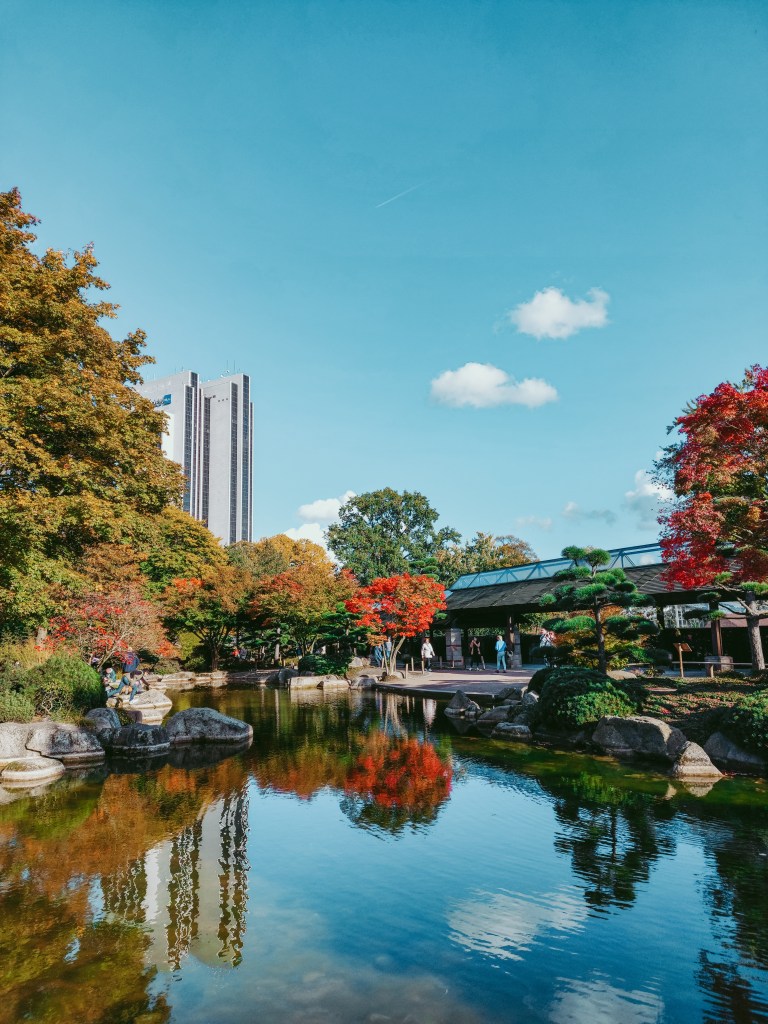
The Wasserlichtkonzerte at Planten un Blomen take place every evening at 9 p.m. until 30 September. From 16 to 30 September, the fountains are accompanied by the programme New Sounds; admission is free and no registration is required.
I have already written about Planten un Blomen in much more detail on the blog, so anyone wanting to explore the park beyond the evening fountain show can also have a look at my earlier piece, “Secrets of Planten un Blomen: Your Guide to a Beautiful Day.”
I particularly like the park in September. By nine in the evening it is properly dark, bringing a jumper is no longer simply an overly cautious decision, and the trees are slowly beginning to change colour, but people are still sitting around the water trying to squeeze a little more time out of summer.
Back to The Coffee Girl’s Adventures
When I started The Coffee Girl’s Adventures in October 2024, I never particularly wanted to decide whether it was a travel blog, a food blog, a cultural site or something else entirely.
Mostly because I am not interested in only one thing either.
I can get just as excited about a good concert as I can about a side street in a city I have never visited before; I am just as interested in the story of a musician as I am in a restaurant I walked into by accident. I am perfectly capable of spending a long conversation with a jazz pianist discussing what improvisation means to him and then, a few days later, analysing a croissant for twenty minutes with complete seriousness.
I like travelling, photography, talking to people, eating, drinking coffee, listening to music, going to the cinema, drawing, and sometimes simply paying attention to the way a city works.
That was always what this site was supposed to be about. It simply went quiet for a while.
In four years, Hamburg has gradually become the city I no longer arrive in, but leave from. I have stories attached to it now, memories, people I know, favourite places and a few reservations of my own — which is probably a much better position to write from than looking at every second building as if I had just personally discovered Europe.
And the journalist’s reflex appears to have survived the break as well. You can stop publishing for quite a while, but that slightly inconvenient habit of seeing, hearing or experiencing something and immediately beginning to edit it in your head apparently does not disappear quite so easily.
So there will still be travel, because there are plenty of places I want to visit and quite a few I have already been to but never properly wrote about. There will be food, because I have absolutely no intention of giving that up. There will be coffee, most likely in unreasonable quantities. There will be music, films, culture, interviews, Hamburg, photography, drawing and probably a few things I have not thought of yet.
My best stories have rarely been the ones where I knew the ending in advance.


Leave a comment