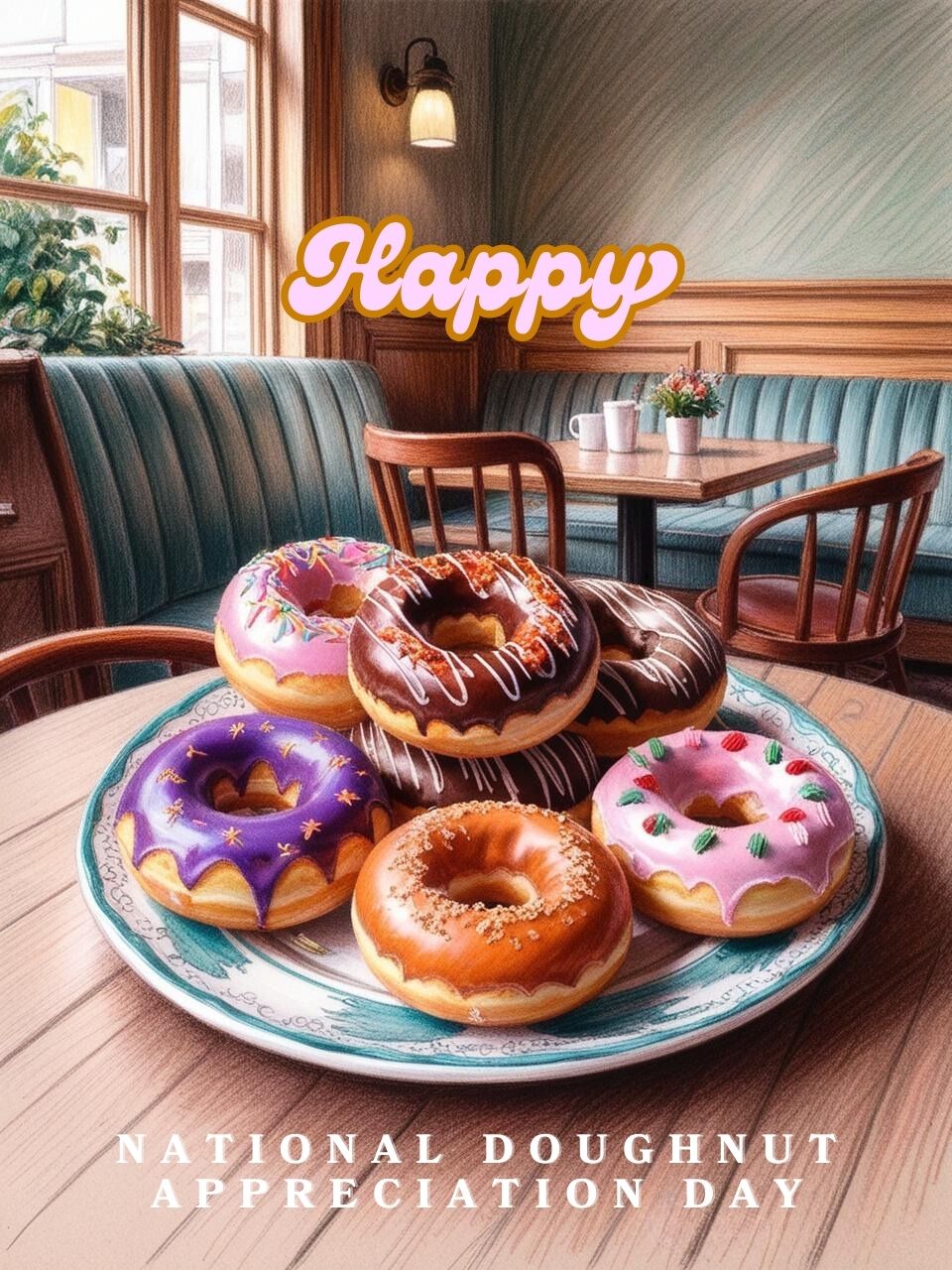
National Doughnut Appreciation Day: A Sweet Celebration
As the aroma of freshly baked doughnuts wafts through the air, it’s hard not to feel a sense of excitement and joy. So greetings from my modest online space, where we will be exploring the delicious realm of doughnuts today. I’m a sweet-toothed Hungarian who has always found the diverse array of international cuisine to be fascinating. And what better way to explore this than through National Doughnut Appreciation Day, celebrated on the 5th of November? Grab a cup of coffee and prepare to savor the sweet history, cultural significance, and irresistible joy that doughnuts bring to our lives!
The Origin of National Doughnut Appreciation Day
On National Doughnut Appreciation Day, we may celebrate by indulging in the delicious, round pastries that make so many people happy. However, where did this pleasant day come from? Like the pastries themselves, doughnuts have a long and varied history.
The United States is where the idea for National Doughnut Appreciation Day originated. In the early 20th century, the doughnut—or “doughnut” as it is frequently spelt in America—became a mainstay of American society. When the Salvation Army gave doughnuts to soldiers during World War I as a reassuring reminder of home, its popularity skyrocketed. Because of how well-received this gesture was, National Doughnut Day was later created and is observed every June.
But the November event is more of a casual homage to these confections, giving you another chance to indulge without feeling guilty. The November festival is more about pure appreciation and fun than its June sibling, which has charity roots.
The other day, a doughnut shop in Portland called Pip’s Originals tweeted me telling me that they named a doughnut after me called the ‘Dirty Wu.’ It is a cinnamon sugar doughnut drizzled with honey and Nutella. It was so good. I just won the Oscar in the sci-fi world.
Reggie Lee – actor, producer
Doughnut Celebrations in Germany
Germany, renowned for its rich culinary heritage, has warmly adopted doughnuts. Locally referred to as “Berliner,” these treats have become a cherished part of the nation’s cuisine. A Berliner is a circular pastry, typically stuffed with jam or cream and lightly sprinkled with powdered sugar, and its delightful simplicity has secured its place as a favorite at many festive occasions.
The History of Doughnuts in Germany
The Berliner boasts a fascinating history. It’s believed to have originated in Berlin, which is reflected in its name, though its precise beginnings remain somewhat mysterious. Some tales suggest it was invented by a 15th-century baker’s apprentice, while other theories propose it drew inspiration from comparable treats in Austria or Poland. Whatever its actual roots, the Berliner is now a staple of German confectionery.
The Berliner can be traced back to the time of the Holy Roman Empire, where similar pastries were popular. It was during the 19th century that the Berliner began to take on its modern form, becoming a favorite at fairs and festivals. The versatility of the Berliner, which can be filled with a variety of jams, creams, and even chocolate, has helped it remain a popular choice for dessert lovers.
Celebrating Doughnuts in Hamburg
Hamburg, a vibrant city known for its eclectic culture and culinary scene, is no exception when it comes to doughnut appreciation. During National Doughnut Appreciation Day, bakeries across Hamburg showcase their finest Berliner creations. The city’s residents partake in doughnut-themed events, from tastings to baking workshops, celebrating both traditional and innovative flavors.
In Hamburg, the Berliner is often enjoyed with a steaming cup of coffee, making it the perfect afternoon treat. The city’s bakeries take pride in crafting these doughnuts, with some offering unique fillings such as chocolate, custard, or even liqueur-infused variations.
Many bakeries also experiment with different toppings, from colorful icing to sprinkles, making the Berliner not only a delicious treat but also a feast for the eyes. Local cafes often host events that allow patrons to decorate their own doughnuts, adding another interactive element to the celebration.
For those seeking delicious doughnuts, Hamburg offers several noteworthy spots:
Dunkin’
The challenge of making decisions, especially when choosing donuts, often conjures iconic scenes from American movies. In these scenes, police officers savor their morning ritual at a neighborhood Dunkin’ Donuts.
In such movies, envision this scene: a circle of uniformed police officers huddled around a table, clutching cups of hot coffee, with a box of donuts at the heart of it all. They exchange playful jabs, weighing the virtues of glazed against jelly-filled, all while piecing together the puzzle of the neighborhood’s most recent crime. The comedy stems from their earnest debates being comically sidetracked by the sheer delight of savoring their sweet snacks.
The officers face a delightful quandary: opt for the traditional Boston cream or venture into the adventurous realm of maple bacon? It serves as a whimsical reminder that amidst the rigors of their duties, there’s always an opportunity for some joy and humor. Indeed, the allure of a donut is hard to resist.
Crafted from a secret American recipe, the dough is hand-filled and adorned with care, ensuring perfection in every bite. True to form, nothing goes awry. It’s this dedication to quality that has allowed Happy Donuts to expand as a franchise across Germany, with three locations in Hamburg alone. And despite the scale, there’s no compromise on quality – each Happy Donazz store freshly prepares these delightful treats daily in their own kitchens.
Brammibal’s Donuts exemplifies that vegan can also mean delicious. This unique donut shop in Hamburg has successfully merged the indulgence of sweet treats with vegan components, all while maintaining exceptional taste and quality. Offering an extensive selection of scrumptious donut varieties, Brammibal’s demonstrates that plant-based options can rival traditional delights in flavor.
The donuts are available in a variety of colors and shapes, making each one a small masterpiece for the senses. Whether you crave fruity, chocolatey, or classic flavors, there’s a donut for every enthusiast that satisfies both taste and conscience.
As a fellow doughnut enthusiast, here are some tips and activities to make the most of National Doughnut Appreciation Day, whether you’re in Germany or elsewhere:
Host a Doughnut Tasting Party
Sample a variety of doughnuts, including classics and innovative flavors.
Create a rating system for guests to determine their favorite doughnut.
Bake Your Own Doughnuts
Experiment with different fillings and toppings.
Host a baking day with friends or family.
Visit Local Bakeries
Support local businesses by exploring unique doughnut offerings.
Look for special promotions or limited-edition flavors.
Share Your Doughnut Creations on Social Media
Use the hashtag #DoughnutAppreciationDay to share your doughnut moments.
Encourage friends to participate and create a sense of community.
Learn About Doughnut History
Dive into the history of doughnuts and share interesting facts.
Create a trivia game focused on doughnut history.
Hungary’s Doughnut Heritage
As a Hungarian, I couldn’t talk about doughnuts without mentioning our own traditional treats. In Hungary, doughnuts are known as “fánk” and are an integral part of our culinary heritage, especially during Easter. Making fánk was always a family moment for me, as my mom and I would prepare them not just for Easter but sometimes for weekends too, sharing laughter and love in the kitchen.
The Tradition of Fánk
Hungarian fánk are typically made from a sweet yeast dough, fried to golden perfection, and dusted with powdered sugar. They are often served with apricot jam or a dollop of whipped cream. The cultural significance of fánk is most apparent during Easter celebrations, when families gather to enjoy these delicious pastries.
Easter in Hungary is a time of renewal and celebration, and fánk plays a significant role in the festivities. Traditionally, families would prepare large batches of fánk to share with friends and neighbors, symbolizing community and togetherness. The process of making fánk is often a family affair, with generations coming together to craft these delightful treats.
Variations of Fánk
While the classic fánk is delicious on its own, there are numerous variations that showcase regional flavors and ingredients. Some may be filled with sweet poppy seed paste, while others might incorporate chocolate or custard. The versatility of fánk allows for creativity in both flavor and presentation, making them a favorite not only during Easter but throughout the year.
In recent years, some bakers in Hungary have experimented with fusion fánk, introducing flavors inspired by international cuisines. For instance, matcha fánk or spicy chili fánk have gained popularity among adventurous eaters, showcasing how traditional recipes can evolve while still honoring their roots.
The Global Influence of Doughnuts
Doughnuts have traveled far beyond their origins, and today they are enjoyed in various forms around the globe. Each culture has embraced this delightful pastry, adding its unique twist to the classic recipe.
Doughnuts in the United States
In the United States, doughnuts have become a cultural phenomenon, with countless varieties and flavors available. From classic glazed and chocolate frosted to more adventurous options like maple bacon and matcha, American bakeries offer a dizzying array of choices. The iconic Krispy Kreme and Dunkin’ chains have popularized doughnuts across the country, making them a staple for breakfast or a sweet treat any time of day.
Doughnuts in the Middle East
In the Middle East, doughnuts are often found in the form of “sufganiyot,” particularly during Hanukkah. These jelly-filled doughnuts are traditionally fried in oil to commemorate the miracle of the oil that lasted eight days. Sufganiyot are typically dusted with powdered sugar and can be filled with a variety of jams or creams, making them a festive and delicious treat.
Doughnuts in Japan
In Japan, the doughnut has been embraced with a twist, often found in the form of “doughnut holes” or “pon de ring.” These chewy, mochi-like doughnuts are typically made with rice flour, giving them a unique texture. Japanese bakeries also experiment with flavors like matcha, sweet red bean, and seasonal fruits, showcasing the country’s appreciation for both tradition and innovation.
Doughnuts in Other Cultures
In many other countries, variations of doughnuts exist with unique names and preparations. In Portugal, “sonhos” are fluffy, sweet doughnuts often filled with cream or custard. In Poland, “pączki” are rich, filled doughnuts enjoyed during Fat Thursday, the last Thursday before Lent. Each of these variations tells a story of cultural significance and culinary tradition, highlighting how doughnuts have become a beloved treat worldwide.
Conclusion
National Doughnut Appreciation Day is not only an excuse to enjoy a sweet treat. It’s also a celebration of culture, history, and the simple joys of life. Whether you’re in Germany relishing a Berliner or in Hungary savoring a fánk, this day offers an opportunity to connect with others through the shared love of doughnuts.
So, mark your calendars for November 5th, and join in the festivities. Indulge in your favorite doughnut, try a new variety, or even create your own masterpiece. As we celebrate this delightful pastry, let’s remember that every bite is a sweet reminder of the connections we share, the cultures we embrace, and the joy that simple pleasures can bring.
If you’ve ever tried making doughnuts at home, what was your experience like? Did you experiment with any unique fillings or toppings? Share your thoughts and experiences, and let’s indulge in this sweet celebration together!



Leave a comment