

Hamburg’s lively streets resonate with the sound of jazz, a perfect backdrop for my encounter with Filip Dinev, a jazz guitarist whose eclectic style has captivated listeners for years. Our friendship spans three years, during which Filip has been an unwavering ally in my immersion into the local music scene. His inaugural album, “Szvetlo,” is a testament to his musical versatility, blending elements of jazz, Balkan rhythms, pop, and classical music, mirroring his expansive musical voyage.
In the latest installment of my interview series, The Coffee Chronicles: Beyond the Spotlight, Filip explores the roots of his unique sound, shedding light on how he weaves a diverse array of musical influences into his creative process. He explores how renowned musical institutions in Budapest and Hamburg influenced his artistic development, as well as his recent return to Macedonia, which has provided fertile ground for new artistic inquiry. Dive inside Filip’s musical journey with us and learn about his aspirations to have a lasting mark on the dynamic environment of jazz.
Filip, your debut record “Szvetlo” has been described as a unique blend of jazz, Balkan, pop, and classical music. Can you share the inspiration behind this eclectic fusion and how you balance these diverse influences in your compositions?
Filip Dinev: It’s just music at the end of the day. Good music, hopefully. Like many of us, I have periods where I dig more into specific genres/artists or at least practice with a specific mindset. For example: classical cadenzas, or Balkan odd-meters, or bebop chromaticism, or counterpoint… Eventually you develop a personal taste (which is also a never ending story) and you juggle with the stuff that you like. I like all of it, as long as it touches me in an emotional/intellectual way. All of the things you acquire show in your live performances, and in your written compositions. Based on these things is sometimes defining how you connect with other musicians. You will most probably “vibe” with someone and not with somebody else. Big part of this is your musical personality. In other words – What do you like?
As a guitarist and composer, what is your creative process like when you begin working on a new piece?
FD: Most of the time I needed a trigger to get me going. A musical something that will get me excited. Or in other words – I need to hear something that I personally like. If I don’t like it, then who’s going to like it? It’s just occasionally that I write something for the sake of writing. Active composers do that – they like writing every day. A lot of us don’t do that and write only when we feel like doing it. Or, very often – when we have a deadline or a project. Both are valid ways in my opinion. So, once you have something that you like – you’d need to continue working on it until you make it a compact composition that your friends can play. Finishing a composition is the hardest thing in this process. Tons of people are creative and have many ideas, but a few finish them. I struggle personally with this as well. Sometimes less, sometimes more. Some people say that composing is suffering. Might not be far from the truth.
How do you maintain a unique sound and flow in a genre that is constantly evolving and where innovation is highly prized?
FD: I’ve never tried to sound original or unique I think. But, probably by exploring your inner voice and musical thoughts, you end up developing a more sophisticated and unique version of yourself. This is probably true for most of the creative works out there. Most of us don’t even try to sound unique. I find something disturbing and weird about it. But yes – I do get what the question is also about. Some musicians/composers are really pushing the boundaries consciously to get something new. If it comes from a true place in the heart, then it’s all right. If not, then many times it’s just “contemporary art” that doesn’t really humanly resonate. I’m all right with both happening.
Can you describe your creative process when composing a new piece? Do you start with a melody, rhythm, or concept?
FD: Most of the time it’s a package of melody, rhythm and some kind of harmony. Sometimes more vertical (harmony) than horizontal (melodic), or sometimes the rhythmic concept is stronger than all of them. Once I have that, I will try to play it many times and stay with the concept. Developing and finishing something is the hardest part I guess. One has to be gentle, I think. It’s quite interesting – you somehow understand/feel the essence/vibe of the new piece while playing it, and you adapt your musical senses to it, but in the same way you don’t want to be stuck in that zone. You want to push it more, add contrasts, breaks, variety and all the good stuff to make it “better”. It’s a pain in the ass honestly, once you have a good starting point.
Many musicians have a particular piece that resonates deeply with them. Is there a jazz standard or a piece from another genre that has significantly influenced your approach to music?
FD: I like Jobim – Antonio Carlos Jobim. Hearing songs like “Aguas de Março”, or “Chega de Saudade”, with the melody and bass line (counterpoint) moving in organic and beautiful ways, very classically influenced is just brilliant. I’ve always liked such things and it always gets me moving. There is a kind of a universal truth behind this, and it’s always “modern”.
As the recipient of the “Best Young Jazz Musician for 2020,” how do you plan to build on this recognition in your future projects?
FD: That was a small award I was given at an annual jazz festival in Bitola, Macedonia (Jazz Factory Festival). I don’t buy awards much. Very rarely when you listen to some artists just because they’ve won an award.
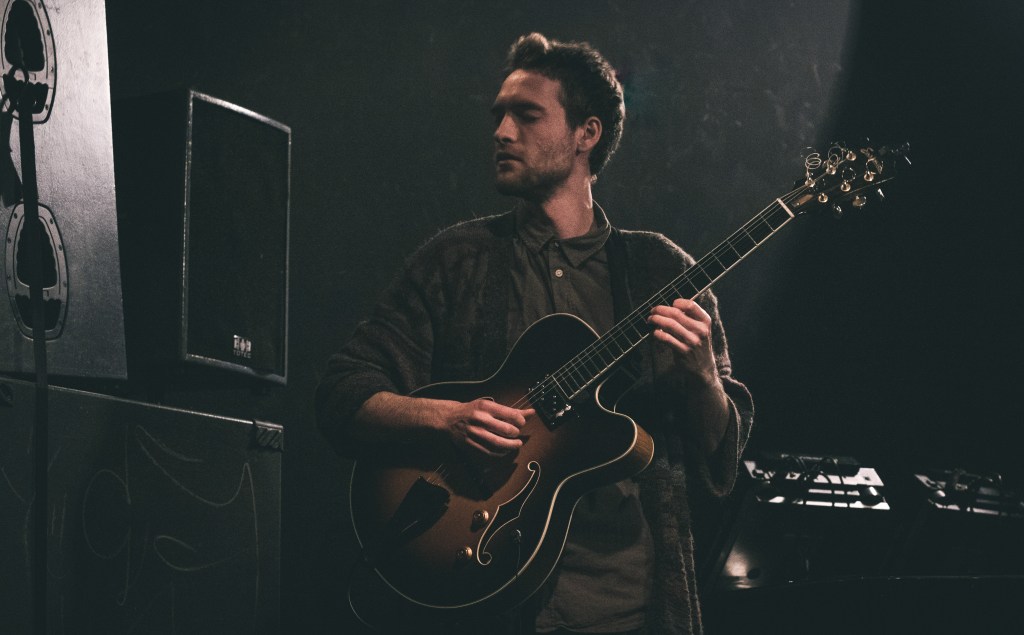
Photo: Napsugár N. Rosta
Who are some of your biggest influences, both within jazz and from other genres, and how have they shaped your musical style?
FD: Oh, I have many I think. I like the old guitarist lately, like Django Reinhardt, George Barnes, Charlie Christian etc. The whole swing era I really love. I still enjoy Oscar Peterson so much. And then from the more modern ones, I was listening to a lot of Brad Mehldau, I remember. There is something intense and beautiful about his trio albums. They way they play together, break apart and come back, having a big dynamic range. While I did my masters in Hamburg I was studying with Teemu Viinikainen, the grandmaster of Finnish guitar. He’s just extraordinary and I owe a lot to him.
Having studied at prestigious institutions like Hochschule für Musik und Theater in Hamburg and the Liszt Ferenc Academy of Music in Budapest, how have these experiences shaped your musicianship and compositional style?
FD: Those environments and the people inside, as well as outside, in the cities, have shaped me probably more than anything else. I was struck with how good the musicians in Budapest are from day 1. Farkaš Zsolt played a solo piece at the opening ceremony. I was speechless… You learn and develop so much by playing your own and other people’s music. Especially if you go deep thinking about minimal stuff. I like doing that. Budapest has a great tradition of jazz jam sessions, and you could go pretty much most nights and hear amazing musicians. My first album “Szvetlo” was recorded after my stay in Budapest. Hamburg was a bit different. Or, maybe my musical perception was evolving differently and I was searching for other things. Probably both. Things got a bit more technical and more “concert” oriented. There was a bit of a bigger international community and you could get to play and talk with a variety of musical minds. I became a bit more technical I think, but it’s just because my musical taste and knowledge evolved, not because it was Hamburg. Anyway, each city has a unique musical tradition, and so far I’ve enjoyed it all.
What was the biggest differences between the two institutions?
FD: I might have slightly answered that. Well – the HfMT Hamburg has more resources I think, especially now, since new rehearsal rooms and a big jazz concert hall were built. More international people and maybe more individualistic original music projects. Less jam sessions and less local concerts maybe. Worse weather for sure, haha. I guess slightly more opportunities and money involved in the process, definitely. On the other side, Budapest allows you to experience an active European touristic city with many different things going on. Amazing concerts, people and 2 of the best jazz clubs in Europe probably! The Budapest Jazz Club and the Opus are such a gem, you won’t find that in Germany, and probably somewhere else…
Can you share a memorable experience or lesson from your time at Budapest and Hamburg during these times?
FD: Many probably. Kristof Bacso told me to fix the B part of a song I brought the first time, because it was kind of boring and similar to the previous part and he was right. Gábor Juhász basically roasted us every time and we’ve learned so much from him. I spent 4 years in Hamburg, so there were a lot of “aha” moments there. Especially while playing with people, or arranging/playing/recording for bigband or doing your own projects.
In 2023 you decided to move back to Macedonia from Hamburg. What was your reasons and why you made it this step?
FD: Well, I thought I’m going to stay or move to Berlin, but it got pretty “knapp” as they say. I got a bit socially exhausted, and having to do a lot of things in German became a bit of a burden. But it was mainly my wish to come and play in Skopje. And, so far, it’s ok, but there are many things to be done here. There is potential, but a lot of years have to pass and even then who knows if the standard will be generally satisfying. For now, I’m here, but I cannot say anything certain for the future. Artists have always migrated…
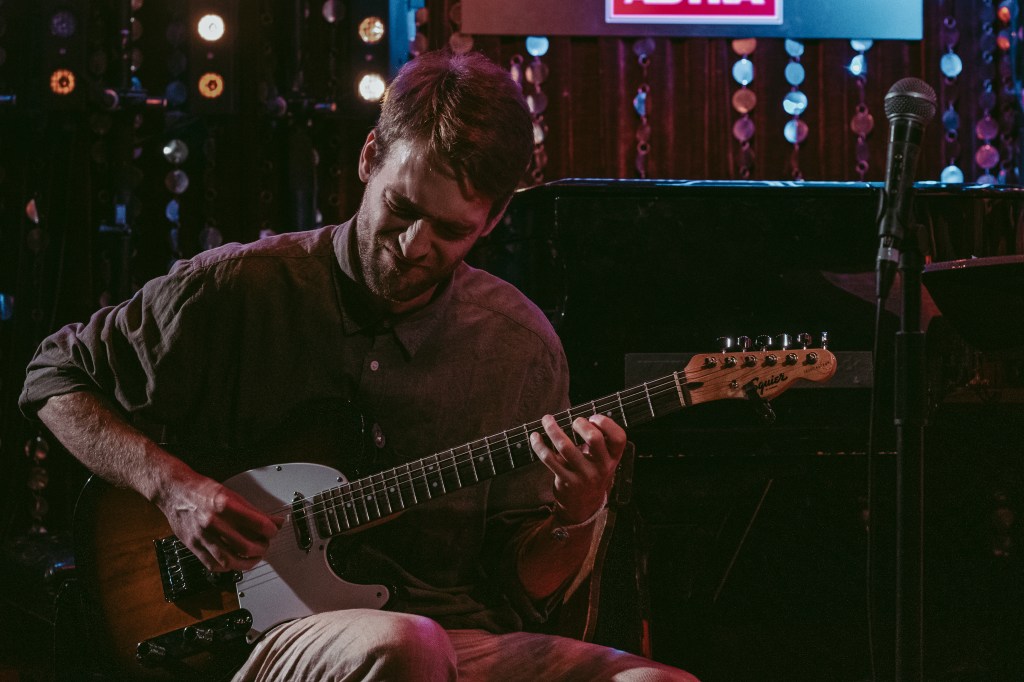
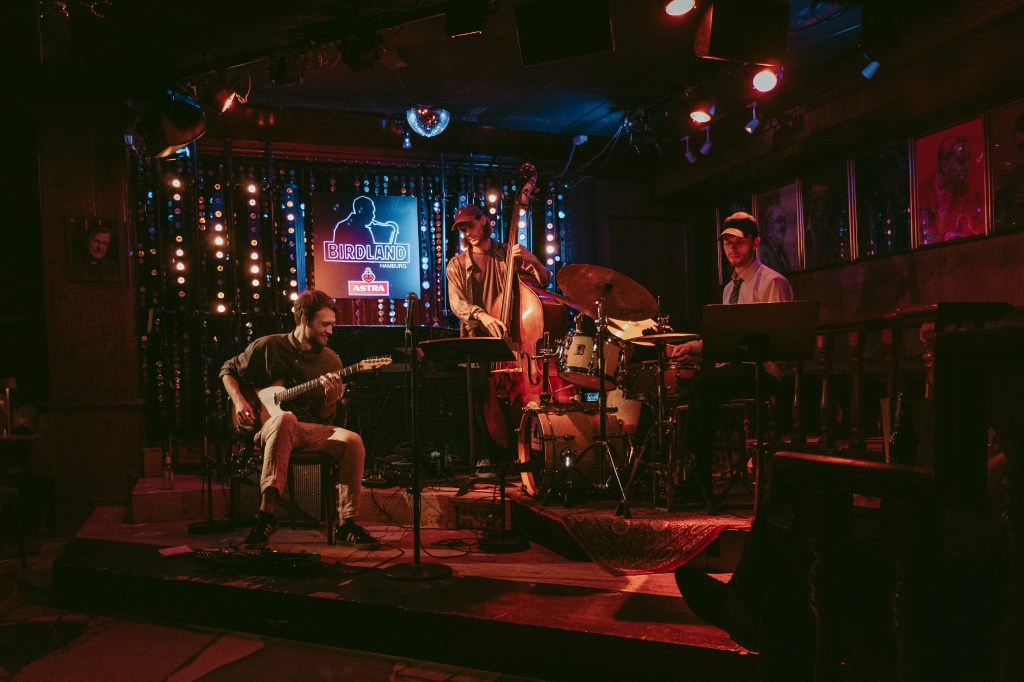
You’re now after a tour where you presented your new album Romann. What was the feedback after the concerts and how did you plan to engage with your audience across different cultures and languages?
FD: We did a little tour in Berlin, Hamburg, Dresden, Leipzig and Basel, and it was great. Jan Zeimetz on the drums, and Paddy Fitzgerald on the double bass joined me. I was personally satisfied and there was definitely organic music happening with lots of exciting new moments for me. It’s a blessing to be able to pay your music internationally.


Photos: Napsugár N. Rosta
How do you see the role of jazz evolving in today’s global music scene, and where do you think your music fits within that landscape?
FD: Jazz is definitely more and more present everywhere. As we joke here in Macedonia – “Jazz is on the rise!”. But “jazz” is many things, essentially meaning taking music art seriously and working on the technical/creative part of it, incorporating written and unwritten (improvised) music. Even though from time to time people do bring something new to the table, be it sound, shredding, rhythm or something different, I think the essence kind of stayed. We still kind of resonate to what we used to resonate with. Good music is still good music. So, yeah, does it evolve? I don’t know, many things have been previously played and written, especially in classical music.
Collaboration is a vital part of jazz. Are there any artists, either within or outside the jazz genre, that you dream of collaborating with, and why?
FD: Sure. I’m currently in Macedonia, and there is a wonderful artist named Branislav Nikolov (Pijan Slavej), from the band Foltin. We’ve started to work on something a while ago and I would really like to get back on that. Besides this, I really enjoy playing acoustic guitar and doing something with acoustic instruments only would be great.
The modern music scene is constantly evolving. How do you see the role of a jazz musician changing in today’s digital and globalized world?
FD: I hope both the educational and entertainment business focus more on providing work for jazz musicians. Theaters, education institutions, festivals, radios, televisions, venues and orchestras should do more things with jazz musicians. Also, more money from the cultural fund should go to support jazz music. It’s a struggle to be a professional jazz musician today and the more support musicians have in general, the better it is. It’s a highly demanding skill that needs to be supported.
What advice would you give to young musicians who are trying to find their own voice in the jazz world?
FD: Just spend time with your instrument and follow your instinct. Play what others have played before you already, but play your music as well.
Since the interview series is titled The Coffee Chronicles, I must inquire about a preference that will serve as a universal response for all future participants. Which type of coffee do you favor, and for what reasons? Alternatively, if you do not consume coffee, which beverage do you find soothing and enjoy as a ritual in your leisure time?
FD: I like “turkish coffee”, cooked on the stove in “cezve”. 🙂
Looking ahead, what are some of the projects or goals you have set for yourself in the next few years, and how do you plan to achieve them?
FD: That’s not an easy one to answer. As I recently transitioned to a new city, I’m still figuring ways to do what I want to do. It means finding a job and having a place to practice and make music. I’d like to record at least 2 albums in the next 2 years maybe. That would be cool. I have a small amount of people I like here and can work with, so it should be possible to do something worth sharing. 🙂
To support Filip, his music is available for purchase at the following website:
https://filipdinev.bandcamp.com/
Website: https://filipdinevmusic.com
Youtube channel: https://youtube.com/@filipdinevmusic
Have any questions or ideas? Than don’t forget to share your thoughts with us in the comments section. And if you enjoyed the interview, don’t hesitate to share it on social media. To ensure you don’t miss any future interviews, subscribe to my newsletter for updates.
 The Coffee Girl's Adventures
Leave a comment